Thursday, January 20, 2011

Thursday, January 13, 2011
A viral video showing a brutal brawl among several women outside a Florida gas station has cops on the hunt for someone to charge.
The wild fight, captured by an unknown videographer, shows the massive melee, which police say took place outside a RaceTrac on West State Road in Ocala. About a dozen women, as well as several men, are gathered in the station's parking lot when the incident breaks out.
Although the video does not reveal what started the brawl, one punch delivered by a female in a white blouse and a black belt appears to kick-start the battle.
"The first group consisted of five females," states an incident report filed by the Ocala Police Department. "The second group consisted of three females."
Authorities believe the fight occurred around Dec. 30 about 2 a.m. The battle begins with the two groups clashing, but then soon splinters, with different fights going on around the parking lot.
"Several of the females involved lose articles of clothing revealing their breasts, buttocks and genitalia," the police report says. It continued for more than three minutes.
The five-girl group appears to win the fight, as near the end of the video, they are seen dancing and singing.
Several others can be seen watching the brawl in the video, yet only a few intervene. One woman, whose clothes were almost completely removed, gets covered by one man and pulled away from the fight.
Leads have been developed in regards to the participants in the fray, along with possible vehicle information, police said. The women are believed to be between the ages of 20 and 30.
Eminem Confirmed To Perform At 53rd Annual Grammy Awards!

Detroit rapper Eminem will be one of the high profile acts that will hit the stage during the 53rd Annual Grammy Awards.
Em, Cee-Lo, Lady Gaga, Miranda Lambert and Katy Perry will perform during the awards ceremony, which will be broadcast live from Los Angeles next month.
Of all the performers, Eminem snagged the most nominations for a single artist, earning 10 nominations in categories like Best Rap Song, Song of the Year and Album of the year, for his best-selling album, Recovery.
Cee Lo Green is up for four awards as well, for his hit single "F**k You."
"This year's nominations are a true reflection of an exceptional and talented community of music makers that embody some of the highest levels of excellence and artistry in their respective fields," said Neil Portnow, President/CEO of The Recording Academy.
The 53rd Annual Grammy Awards take place on February 13th at The Staples Center in Los Angeles, from 8PM-11 EST.
Canadian Hip Hop vs. America
The story of Canadian rap music’s difficult relationship with mainstream America starts with Michie Mee. In 1987, Toronto’s first lady of hip hop bounced between high school and a recording studio to cut a single with KRS-One and Scott La Rock of New York’s legendary Boogie Down Productions. (To recast that in rock terms, imagine skipping Grade 12 algebra to make music with Bono and the Edge.) Michie’s Elements of Style made a splash stateside, landing her an international recording contract with Atlantic Records – the first-ever deal between a Canadian MC and a major American label. She began gigging internationally, opening concerts for megastars like Sinead O’Connor. Her Juno-nominated debut album with DJ L.A. Luv, the reggae-inflected Jamaican Funk: Canadian Style (1991), moved 60,000 copies south of the border, mostly in Buffalo and Detroit.
These were the early days of hip hop as empire: rap, once discounted as an inner-city fad that would flame out as disco and funk did before it, spent the turn of the ’90s tightening its persistent, platinum-fingered grip on American music. From the jazz riffs of Gang Starr through the gangsta swagger of N.W.A., rap blew out radio dials from New York to Los Angeles.
Michie, however, got left at the border. “With me doing the reggae stuff, some of it was like another language," she says now. "I didn’t go in with a Canadian accent - I went there to make American hip-hop. Nobody understood what I was doing except for the hardcore street DJs.” Atlantic dropped her contract. A comeback album, The First Cut is the Deepest (2000), found more fans among critics than consumers. Today Michie, better known in recent years for acting (as a rapper) on the defunct CBC series Drop the Beat, is recording new music - in American studios - for a group project called Crew Grrl Order.
Canada, it needs to be said, has limited love for hip hop. The music has rabid fan bases in city centres like the T-Dot (Toronto) and Van City (Vancouver), but the plain truth is this country lacks the young, urban (or urban-minded) population needed to consistently support high-volume sales for its homegrown rhymers. While mainstream pop and guitar stars like Avril Lavigne and Nickelback measure success in millions of copies sold, Canada’s microphone controllers can spend years hustling to reach modest targets like 50,000 or 100,000. Sales outside the country are a rare phenomenon.
The situation is reversed in America, where hip hop has become the musical drug of a nation: in 2000, hip hop and rap combined to supplant country as the second-most-purchased genre of music in the U.S. (Hip hop is a culture that includes rap music; the terms are sometimes used to indicate slightly different sound styles, where hip hop (Outkast, the Roots) is taken to mean a more sophisticated version of rough-and-tumble rap (the Notorious B.I.G., G-Unit).) Only rock sells more. American movies, television shows and commercials are saturated with hip-hop references; there, MCs are actors, pitchmen and red-carpet celebrities.
Michie Mee.
The major labels in the U.S. like to swing for the fences, spending heaps to promote champion unit-shifters like Jay-Z, Snoop Dogg, Nas, Ludacris and a select few others. American superstar producers are trusted to break new names – Dr. Dre is the puppet master who breathed life into 50 Cent and Eminem. For high-profile acts like these, anything less than a blockbuster is considered a misstep. (Canada’s urban labels – including our majors – tend to take a longer view of their artists’ careers, accepting that debut sales of, say, 8,000 units is a signal of promise, not disaster.)
Finding a way inside America’s multibillion-dollar rap machine is the main source of Canadian frustrations south of the border, as lived by Michie and the rhyme animals that have followed her (such as the Rascalz and Choclair, to name only two). Canadian rappers have learned that the last hurdle to breaking into hip hop’s major leagues, landing an American deal, is just one step: and a long leap shy of becoming a foreign priority. When it comes to the question of which artist to push next, America always finds a reason to back one of its own.
“You know what my boys in Brooklyn tell me? ‘Americans don’t want you to win,’” says Saukrates, the Toronto MC and producer who, along with long-time friend Kardinal Offishall, leads Can-hop’s latest crop of ace MCs. “And they don’t. A lot of the artists will suck up all the energy at their labels because they don’t want nobody to come and take their position, especially not a Canadian who can do it better than them. You gotta fight for your shine.”
And then there’s the other problem facing our homegrown rap heroes: Rick Mercer’s Talking to Americans is true. Too many U.S. labels assume this country is carpeted with ice rinks and igloos. Their urban artist-and-repertoire execs are known for signing hard-luck ghetto stories hand over fist – provided that the ghettos in question are located somewhere inside the United States.
Authenticity is the beating heart of hip-hop culture (even though most fans know that most MCs are fibbing), and Canadian artists typically find it close to impossible to export theirs to America. While the U.S. rap machine allows a middling rapper like the Game (Dre’s latest protégé, whose major-label debut just moved 587,000 U.S. copies in its first week of release) to tell and sell tall tales about thug life, it assumes that any Canuck talking tough must be lying – and is therefore useless.
Recall the career of Maestro Fresh-Wes, to date Canada’s top-selling hip-hop artist. In the late ’80s, his Let Your Backbone Slide became this country’s first full-on rap anthem. The Maestro was already a pro when the song hit, having made his radio debut at age 15, all the way back in 1983; later, he opened local concerts for American giants Public Enemy, Ice-T and the Beastie Boys as half of Toronto’s Vision Crew. Wes wowed as a soloist at the 1989 edition of New York’s annual New Music Seminar, coming away with a contract from American independent Lefrak-Moelis Records.
Backbone, released as a single, became the first Canadian song to land on Billboard’s rap charts, moving 25,000 U.S. copies its first few weeks of release; MTV added the Maestro’s video to its rotation. The song re-appeared on his 1989 debut album, Symphony in Effect, which was originally available in Canada only as an American import. After Wes signed a domestic distribution deal with Attic Records, Symphony went on to sell 190,000 copies in Canada, approaching double-platinum status. His follow-up, The Black Tie Affair, came out in 1991. As with Michie’s second effort, Affair performed better in magazine columns than checkout lines. The Maestro, peeved by a perceived lack of support from Canadian radio programmers, decamped to New York in 1992.
The Maestro moved, but so did the music: ’92 was the year Dr. Dre released The Chronic, establishing the G-funk sound (at root, a combination of George Clinton’s funk with Snoop Dogg’s swagger) that defined America’s West Coast through the turn of the century. One year later, Staten Island’s Wu-Tang Clan delivered Enter the Wu-Tang (36 Chambers), a dark, violent album (“I be that insane nigga from the psycho ward / I’m on the trigger, plus I got that Wu-Tang sword”) that sent most of New York rushing to mimic its grit.
Hip hop turned hard and dirty; the Maestro, who made his name wearing and rhyming about “a black tuxedo with a cummerbund,” stood still and became an anachronism. America’s mythical street, the ultimate arbiter of hip-hop taste, turned its back to him.
Wes’s third album, 1994’s tragically titled Naah, Dis Kid Can’t Be From Canada?!!, fell flat on both sides of the border. (Perhaps deservedly so. The album’s first chorus: “It’s Fresh Wes y’all / I’m drinkin’ milk now / I’m drinkin’ milk y’all / I’m drinkin’ milk now.”) The Maestro moved home to Toronto in 1997; he had a minor comeback in 1998, rhyming over a Guess Who sample on the summer hit Stick to Your Vision. Today he is still touring, but also acting, on Omni Television’s Metropia, using his birth name, Wes Williams.
Michie, the Maestro and the Dream Warriors, who found a huge following in Europe, formed the vanguard of Can-hop’s first generation. Jump to now, and the potential for an American breakthrough feels closer than it did then. Toronto rhymer K-Os is an MTV mainstay. Vancouver’s Swollen Members are equally popular on iPods in Aspen as they are in Whistler. But according to the American street, two names rise above those and all other Canadian rhymers: Kardinal Offishall and Saukrates.
To foreign ears, Offishall is the closest thing Canada has to rap royalty. He is the unofficial lord and master of Toronto’s hip-hop scene, and a legitimate underground sensation from Atlanta to Zurich. Kardinal is a frequent collaborator on U.S. stars’ albums; last year’s work included scorchers with Method Man and Pete Rock. He routinely equals, and sometimes outshines, his foreign partners.
The Toronto-born MC and production wizard – Kardinal is also a beat factory, always hustling to make music for himself and other artists – was raised in the embrace of Scarborough’s West Indian community. He has often said that he feels more comfortable identifying with his Jamaican roots than his Canadian identity. His combination of influences is dizzying, blending rap, reggae and soul –Bakardi Slang, Money Jane and Gotta Get It rank among the peak songs in Canada’s hip-hop canon.
American titan MCA Records released Kardinal’s international debut, Quest for Fire: Firestarter, Vol. 1, in May 2001. The album set heads nodding on both sides of the border. Kardi started getting recognized on the streets of New York, and stopped waiting in line at its clubs. “I’d be in L.A. or some place and I’d see myself getting played on MTV and BET [Black Entertainment Television] and all the rest of it,” he says, taking a break from making music in his Toronto studio.
In 2002, Offishall began work on a follow-up, The F-Word Theory. MCA, the illustrious home of the Roots, Common and other U.S. gold stars, put him in a sound booth with super-producers Timbaland and the Neptunes. (Only Dre rivals their sales power.) He seemed poised to become Canada’s first real-deal, cross-border rap superstar.
But The F-Word suffered a raft of delays. Kardi, lacking the proven fan bases of his label mates, got bumped and lost in MCA’s release queue. When Geffen Records swallowed the label in May 2003, forcing layoffs and restructuring, he lost his chance to release the record. Kardinal spent months climbing out of the wreckage.
Kardinal Offishall.
“With this label bullshit, I had to sit on my hands for a while when we went through all the red tape,” he says. “Fans don’t understand all that industry stuff.” Late last year, on an underground mix-tape called Kill Bloodclott Bill: Vol. 1., Kardinal used his microphone to gun down the major labels – i.e., Bloodclott Bill – that rule the U.S. machine: “This ain’t just some music story / It’s about how real niggas return for glory / Bill tried to leave me out in the cold to die / I told y’all before we just multiply.”
At the moment, Kardi is sitting on a war chest of 100 new songs. He is weighing release options for his next solo album with big-name labels in Canada and the U.S., with hopes for a June release date. “After all that MCA foolishness that went on, I was a bit weary about hooking up with a major again,” he says. “But the way we’re structuring my deal this time, it feels like going in there with a fresh suit of armour. No matter what goes on, we’ll be all right. We won’t have to suffer at the hands of labels being shitty.”
That’s a story Saukrates knows too well. He, like Kardinal, is a key member of the Circle (né Figurez Ov Speech), a loose collective of Toronto’s top urban artists. He, like Kardinal, has been undervalued, delayed and dismissed by the American machine: Saukrates was screwed over by Warner Brothers and Def Jam, in that order.
“American labels end up with this bottleneck effect. The [label] presidents get a little wild, they start partying a lot – and they give all their attention to the one or two most famous artists at the top of the bottle. The other artists inside the bottle can’t get out because there isn’t any space to fit through,” he says, shaking three sugars into a mug of coffee at a downtown Toronto café. It is mid-afternoon on the day after he opened a sold-out show for New York hip-hop hall of famers De La Soul.
“With U.S. labels and the way that they work, I always had to have nine people sign on one piece of paper for me to burn a CD in the studio. Before anything happens, nine planets gotta align,” he says.
Saukrates has already given 10 years to the rap game; his latest single, Saukrates Season, is currently climbing U.S. hip-hop charts. Like Kardinal, he is busy shopping for a home for his new solo album, Bad Addiction. In the meantime, he is producing records for upstarts Big Black Lincoln and Andreena Mill (“she’s a young black Cyndi Lauper”) for his boutique label, Toronto’s Capitol Hill Music. Saukrates intends to see Bad Addiction on store shelves this summer, with the others to follow this fall or early next year.
“I won’t be satisfied until the world accepts us. I don’t want to be pigeonholed just in Canada – only touring in Canada, only viable in Canada. No, no, no. Hell no. We’re going to do more than compete. We’re gonna get in there,” he says. “America has heard the east, they’ve heard the west, they’ve heard the south – now here comes the motherf---in’ north.”
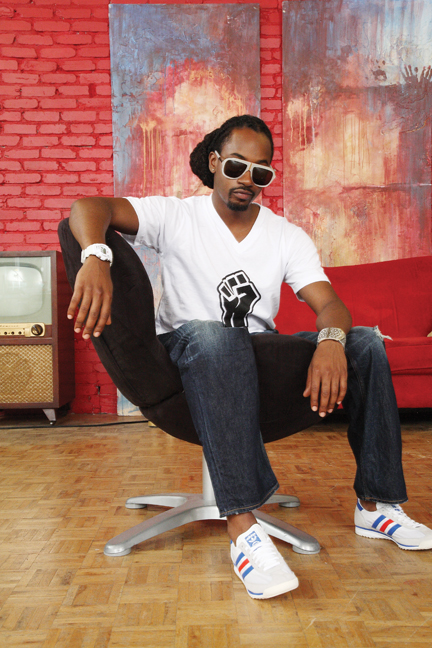
Saukrates
well i went to facebook and asked all my friends there most of them amateur singer or pro and no one could answer me correct who is Saukrates was like wow man that too bad. some though about the philosopher Socrates but no my friends its not. So to help ya and also to remember i decide write a blog about him.
Karl Amani Wailoo (born December 20, 1977), better known by his stage name Saukrates. A Toronto-based rapper with an ear for music (classically trained in the violin and cello) and a head for business, Saukrates was fed on the mid-'80s rap styles of De La Soul, Special Ed, and the Native Tongue rap movement. He freestyled rhymes on the fly, basing his lyrics on personal experiences and dreams, just as other rappers before him. Once he started putting his rhymes to paper in 1989, the young MC began to seriously fine tune his skills. Saukrates hit pay dirt with his first single, "Hate Runs Deep," released in late 1994. It won top prize at an MC contest and, at 18, he followed with "Brick House" on Slammin' Records. In 1997, a mix-tape release hit the streets and Saukrates became well-known in college radio circles for the rap jams "Father Time" and "Play Dis." Just when success was all but guaranteed, Warner Bros., his then-label, essentially shut down its rap music division, leaving Saukrates with recorded material but no mode of distribution. Joining creative and financial forces with his manager, Chase Parsons, he created Capitol Hill Music and in early summer 1999 they released Saukrates: The Underground Tapes in the United States under the Serious Entertainment label. Later that same summer, The Underground Tapes was re-released in Canada on Capitol Hill Music/ILL Vibe with six additional tracks.
Karl Amani Wailoo (born December 20, 1977), better known by his stage name Saukrates. A Toronto-based rapper with an ear for music (classically trained in the violin and cello) and a head for business, Saukrates was fed on the mid-'80s rap styles of De La Soul, Special Ed, and the Native Tongue rap movement. He freestyled rhymes on the fly, basing his lyrics on personal experiences and dreams, just as other rappers before him. Once he started putting his rhymes to paper in 1989, the young MC began to seriously fine tune his skills. Saukrates hit pay dirt with his first single, "Hate Runs Deep," released in late 1994. It won top prize at an MC contest and, at 18, he followed with "Brick House" on Slammin' Records. In 1997, a mix-tape release hit the streets and Saukrates became well-known in college radio circles for the rap jams "Father Time" and "Play Dis." Just when success was all but guaranteed, Warner Bros., his then-label, essentially shut down its rap music division, leaving Saukrates with recorded material but no mode of distribution. Joining creative and financial forces with his manager, Chase Parsons, he created Capitol Hill Music and in early summer 1999 they released Saukrates: The Underground Tapes in the United States under the Serious Entertainment label. Later that same summer, The Underground Tapes was re-released in Canada on Capitol Hill Music/ILL Vibe with six additional tracks.
In the 11 years since Saukrates released a solo album, he’s collaborated with Nelly Furtado and given Drake a crucial boost. He’s back, and with Season One, he’s out to prove that he’s in it for the long haul.
With more than 15 years in the industry, Saukrates is legitimately one of Toronto’s most consistent hip-hop artists. Toss in his work as a producer and collaborator with singers such as Jully Black and Nelly Furtado, among others, and it’s virtually impossible to pigeonhole him as just a rapper or to deny his talent.His hard work hasn’t gone unnoticed, as young fans and their parents recognize and approach the affable musician.
Among the artists with whom the 32-year-old has worked closely is Drake, as attested by the track Fades Away, on which the former Degrassi star appears. In 2006, when Saukrates toured with Nelly Furtado he brought Drake. “That, I think, gave him the opportunity to feel like everything he was doing was worthy on a scale where we could take it to grand stages,” says Saukrates (a.k.a. Bigg Soxx on Facebook). The two also did some shows together on Drake’s recent U.S. tour and remain friends.
Saukrates has even spent time in the studio with people who are now integral members of Drake’s team. Engineer  and producer Noah ‘40’ Shebib, who interned with Saukrates, met Drake through the connection. And, producers D10 and Boi-1da also worked with Saukrates.
 and producer Noah ‘40’ Shebib, who interned with Saukrates, met Drake through the connection. And, producers D10 and Boi-1da also worked with Saukrates.
Saturday, December 25, 2010

Thursday, December 23, 2010
Kurupt

began his winding career with Death Row Records and rose to momentary fame alongside Dr. Dre and Snoop Dogg, but struggled to establish himself as a successful solo artist. Born Ricardo Brown in Philadelphia on November 23, 1972, he moved to Hawthorne, CA, where he befriended Snoop and joined the roster of Death Row. He debuted on Dr. Dre's The Chronic (1992) and continued to contribute guest appearances to successive Death Row releases, most notably Snoop's Doggystyle (1993). He ultimately debuted as one-half of Tha Dogg Pound, a partnership with rapper/producer Daz Dillingerspun off from Snoop's enormous success at that time. Together with Daz and Snoop, Kurupt enjoyed sizable success with Dogg Food (1995) and its hit singles: "Let's Play House" and "New York, New York." Three years later the then-A&M-affiliated Antra Records released Kuruption! (1998), the rapper's ambitious double-disc solo debut. The album met modest success but didn't make much of a commercial impact, nor did its tighter, more traditional follow-up, Tha Streetz Is a Mutha (1999). Kurupt's next release, Space Boogie: Smoke Oddessey (2001), aimed for crossover success, incorporating pop-rap elements as well as unlikely big-name guests like Fred Durst and Everlast, but again made little impact beyond the rapper's following. Meanwhile, Kurupt teamed with Daz for another Dogg Pound album, Dillinger & Young Gotti (2001), which presented a much more underground sound, released independently by D.P.G. Recordz. Meanwhile, Death Row released 2002 (2001), a collection of leftovers from Tha Dogg Pound's mid-'90s era. In the wake of these many releases and little accompanying commercial success, Kurupt returned to the long-quiet Death Row label in 2002 and helped Suge Knight revive the infamous label. Against tha Grain, released in 2004, was the first fruits of the relationship.
Subscribe to:
Posts (Atom)